Saturday, April 26, 2014

Dark Places

It's Easter break and I finally had enaugh time to read a book again that I can highly recommend to you. ;)
It's called Dark Places by Gillian Flynn, who I realized writes awesome books.


Here's a short summary of the content:

Libby Day was seven when her mother and two sisters were murdered in "The Satan Sacrifice" of Kinnakee, Kansas. She survived and testified that her fifteen-year-old brother, Ben, was the killer. Twenty-five years later, the Kill Club - a secret society obsessed with notorious crimes - locates Libby and pumps her for details. They hope to discover proof that may free Ben from prison. Libby hopes to turn a profit off her tragic history: She'll reconnect with the people that were or might have been involved that night and report her findings to the club - for a fee. As Libby's search takes her from shabby Missouri strip clubs to abandoned Oklahoma tourist towns, the unimaginable truth emerges, and Libby finds herself right back where she started - on the run from a killer.


This was one of the books that when you start reading, you don't wanna put it down till you know what exactly happened. It was so exciting to read and the ending of the novel, you would definitely not have expected and that's what I love about Flynn's books!
It is a little twisted but brilliant at the same time, so if you are looking for a good book to read, this would definitely be a good choice!


Sunday, April 20, 2014

Where the Easter Bunny came from....


It’s Easter and I was always curious about where the tradition of the Easter Bunny actually came from and what a rabbit really has to do with Easter. Here’s what I found out. First of all, for those who don’t really know what Easter is all about, Christians celebrate the resurrection of Jesus.

The word Easter comes from a pagan figure called Eastre who was celebrated as the goddess of spring by the Saxons of Northern Europe. The goddess Eastre’s symbol was the rabbit, which was known as a symbol of fertility, because rabbits and hares give birth to large litters in the early spring.

Now, how the Easter Bunny tradition really began isn’t entirely clear. It is thought that Germans were the first to associate a bunny with Easter. In 16th century literature, there are accounts of a bunny that, each spring, would reward the good kids with eggs. The first edible Easter Bunnies, made out of pastry and sugar, were made in Germany during the early 1800s.

The tradition of the Easter Bunny appears to have been introduced in the United States by German immigrants, who settled in Pennsylvania in the early 1800s. The arrival of what the Germans referred to as the “Osterhase” was considered “childhood’s greatest pleasure”, next to a visit from “Christkindl” or “Santa Claus” on Christmas Eve, who also deliver presents as you all know.
 
 
In legend, the Easter Bunny brings baskets filled with colored eggs, candy and sometimes even toys to the home of the children who had been good throughout the year. Way back, the children would build their own nests in a hidden place at home, in the garden or in the barn, the night before Easter Sunday, hoping the Easter Bunny would find it and fill it with eggs and candy. Boys would use their caps and girls their bonnets to make the nests. Today, the tradition of the Easter egg hunt is much more common, meaning the Easter Bunny hides the baskets and eggs somewhere in the house or garden for the children to find them when they wake up in the morning.


Over the past 200 years, the Easter Bunny has become the most commercially recognized symbol of Easter. This might be a little bit of a problem in my opinion, because people, especially kids, forget that Easter is not only about the Easter Bunny but actually about the resurrection of Jesus. Don’t get me wrong, I think the tradition of having an Easter Bunny hide candy and presents is awesome, but we shouldn’t forget that this is not the only thing that Easter is about...


Anyway, Happy Easter to everyone and I hope you’ve all been good and the Easter Bunny will leave a nice basket for you!!! ;)


Saturday, April 19, 2014

25 facts about coffee


I LOVE coffee and couldn't imagine a life without it. It helps me wake up in the morning and it just tastes awesome! Coffee is an essential part of people's lives all over the world. Now, all the coffee-lovers: grab a cup of coffee and read through these interesting facts. I guarantee, most of this will really surprise you!!! :)

 
#1: It all started with dancing goats. Legend has it that a 9th century Ethiopian shepherd first noticed the effect of caffeine when he saw his goats go crazy and “dance” after eating coffee beans.
#2: Originally, coffee was eaten. African tribes mixed coffee berries with fat which formed edible energy balls.
#3: All coffee in the world is grown in the “bean belt”.


 #4: In 1675, the King of England banned coffee houses claiming they were places where people met to conspire against him.
#5: 70% of the world’s population consumes Arabica coffee, which is mild and aromatic. The remaining 30% drinks Robusta, which is more bitter-tasting but has 50% more caffeine than Arabica.

#6: Coffee grows on trees that can grow to be up to 30 feet tall but are usually cultivated to be around 10 feet (=3 meters) tall for easy picking.
 

#7: The coffee bean is actually a seed inside of a bright red berry.


#8: Coffee is the second most traded commodity on earth. (Oil is the most traded)
 

#9: George Washington invented instant coffee. Wait, what??? Not the US president, but a man of Anglo-Belgian origin living in Guatemala by the name of George Constant Louis Washington invented it in 1906.
 
#10: Coffee can kill you. The lethal dose of coffee for an adult is 100 cups, so be careful… ;)
#11: There are about 50 different species of coffee.
 
#12: Coffee is the most popular and most consumed drink worldwide. Approximately 400 billion cups of coffee are being consumed each year. On average men drink 1.7 cups a day – women 1.5 cups.
#13: Scientists are researching on other uses of coffee beans. They might actually replace fossil fuel and work in motor engines in next centuries. What a cool thought – our cars could be run by coffee one day! ;)
#14: Brazil and Colombia produce more than 40% of all coffee in the world. Hawaii is the only US state that produces coffee commercially.


#15: Once a coffee-lover made a world record in consuming coffee. He drank 82 cups of coffee in 7 consecutive hours!!!

#16: New Yorkers drink almost 7 times more coffee than people of any other city in the US.


#17: A French doctor in the 1600s suggested Café au Laits for patients, inspiring people to begin adding milk to coffee.

#18: Also in the 1600s, there was a controversy over whether or not Catholics could drink coffee. Luckily Pope Clement VIII said it was okay.

#19: The French philosopher Voltaire is said to have drank 50 cups of coffee a day.
 
 
#20: In the ancient Arab culture there was only one way a woman could legally divorce: if her husband didn’t provide enough coffee!!!

#21: Johan Sebastian Bach wrote an opera about a woman who was addicted to coffee.

#22: Theodore Roosevelt is and was the greatest American coffee drinker, consuming a gallon a day!

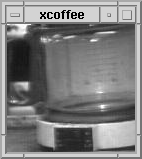
#23: The first webcam was invented at the University of Cambridge to let people know if the coffee pot was full or not.
#24: Irish coffee was invented to warm up cold American plane passengers leaving from Ireland.

#25: It is said that Cowboys made their coffee by putting ground coffee into a clean sock and immerse it in cold water and then heat it over a campfire. When it was ready, they would pour the coffee into tin cups and drink it.